Sunday, May 26, 2024

May 20-24

 May 21-24


Even with a short week, we returned from the May Long Weekend ready to learn and get busy!  


Looking ahead to this next week, we would like to take our class on a walking field trip to Fish Creek Park, on Tuesday morning (May 28) from 9:00-11:30 am.  This is a great time of year to explore the land and make connections to our learning in Science as well.  Please ensure your child is properly dressed and has a coat that day.  We are also highly encouraging rubber boots, as we will be stepping off the paved path to take a closer look at plants and animals.  


Literacy 

Learning Intentions

Read simple, fully predictable, and decodable texts independently. 

Understand words and sentences from print texts read independently. 

Share understandings of print texts read independently. 

Self-correct when print text does not make sense. 


We are nearing the end of our expectations for our learning of new phonics letter sounds for Grade 1 and are now turning our attention to mastering the sounds that we have learned throughout the year, but more focused on our second term and the letter combinations.  Your child is still developing these skills and benefits greatly from reading decodable texts at home for a few minutes each night.  Our goal is to be selecting texts that have the numbers 3, 4 or 5 on them.  We understand that some of these texts can be quite lengthy - but even 5 minutes a day can make a difference!  If you need help with ensuring your child has a book at home, please feel free to reach out and we are happy to help with ensuring your child has a book to read!  


This week we reviewed R-controlled vowels as well as the -le sounds at the end of words.  This had us spelling longer words with 2 syllables, but if we slow down, we can sound out and hear all the sounds!  We are so proud of the amazing growth in reading this year!  


Science/Literacy 

Learning Intentions:

Observe and describe similarities and differences between plants and animals.

Understand how an environment meets the basic needs of plants and animals 

Understand how humans take care of plants 


We have been busy digging in more to our learning about plants and animals and their needs.  We have each planted a seed in the “greenhouse” located in the Learning Commons and look forward to watching and taking care of our plants for the next few weeks.  


We also made connections to our writing and literacy as well, by zooming in on a picture.  We found the things and labelled them in red.  We then brainstormed a describing word and wrote those in blue.  After, we then brainstormed an action word for each part of the picture as well, and labelled that in green.  These then helped us write an interesting sentence with all 3 words included.  


In our table groups, we then were given a picture of a plant or animal and had to work together to generate describing words for that thing.  We showed great ability to work together and collaborate our ideas. 


Math

Learning Intentions 

I can investigate different adding and subtracting strategies

I can add and subtract within 20

I can express addition and subtraction symbolically

I can solve problems involving addition and subtraction


We have continued to build on our skills of addition and subtraction and apply these to solving problems.  One problem this week was being given the menu below and finding different ways to buy 3 things and not spend more than 14 cents.  


We also worked on creating a design with pattern blocks, and different shapes represented a different amount.  We could choose if we wanted to build a design that was worth 15, 20 or 25.  Our math skills have expanded so much and we are really able to communicate and discuss different strategies to use, such as using doubles or counting on or counting back.  These skills are ones that continue to benefit from continued practise and we encourage you to support your child with practising their addition and subtraction at home too!


Solving Problems Involving Addition

Students might use any of these strategies to solve problems involving addition:

•

working with concrete models, such as 10-frames, number paths, or counters

•

counting on

•

relating an unknown situation to a known one

For example, if students realize that 5 + 5 is 10, they might solve 6 + 5 by thinking of it as 1 more than 5 + 5.


Solving Problems Involving Subtraction

Students might use any of these strategies to solve problems involving subtraction:

•

working with concrete models, such as 10-frames, number paths, or counters

•

counting on or counting back

•

relating an unknown situation to a known one

For example, if students realize that 10 – 5 is 5, then they might think of 10 – 6 as 1 less than 10 – 5 because you are taking away 1 more or because the space from 6 to 10 on a number path is 1 less than the space from 5 to 10.


Solving Problems With Many Steps

Some of the problems students will experience in this topic involve situations that combine addition and subtraction.

For example, if you had 8 counters and then got 4 more and then someone took 5 away, how many counters would you have?

•

You could think about 8 + 4 first, which is 12. Then you could think about 12 – 5, which is 7.

•

But you might realize that you are taking away 1 more than you add, so you would end up in the same place if you simply took 1 away from 8.

8 − 1 is 7.


Helping Your Child

Take advantage of any opportunities for your child to add or subtract relatively small numbers. For example, if you have 5 apples in the kitchen and you buy 4 more, you could ask your child to figure out how many apples you have altogether.

Because this topic focuses on figuring out answers, you could play games with your child that involve adding and subtracting. For example, this game is for two players:

Each player receives two playing cards that are numbers.

The player with the greater difference scores 1 point.

The game is over when one player has 10 points.


Friday, May 17, 2024

May 13-16

Dear Parents

We are so excited to be welcoming weather.  We connect this to our learning about the season changes as well as our living systems topics in science.

Writing

This week we have been combining our focus on seasonal changes and nonfiction writing to have students begin to think about how we dress and the activities we do change as we are beginning to experience more spring-like weather.  We brainstormed ideas as a class connected to clothing choices and recreational activities that we do this time of year.  Students record their own ideas in their visual journals.  We then used this to guide our writing to write a focused piece of writing connecting to this topic.  


Learning Intentions:

I can create messages that are for a specific purpose

I can combine ideas in an order that makes sense to create sentences.

I can record facts in different ways.

I can identify seasonal Changes that may affect a variety of choices and activities, such as:

  • Clothing choices

  • Recreational activities


Science

In Science, we began our unit on Living Systems.  We learned about what the rules are for things that are living.  

  • They need energy (food, water, sunlight)

  • They grow and change

  • They reproduce (make more of themselves)

  • Respond to the world around them


We also read and learned about plants and animals.  We then went outside and looked for different plants and animals and recorded it in our visual journals.  We visited our Class Tree as well and were excited to notice that is has developed its blossoms.  We look forward to watching its spring changes in the next week.  


Wellness/Literacy 

As a part of our time in Maker on Fridays, we like to take time to reflect on our work, what worked well, what challenges we had, and how we resolved them.  As a connection to our chicks hatching last week, students were asked to build a chicken-coop that would protect the chickens and provide them with all the things they would need to survive.  Although a building task, Maker provides students the opportunity to work together in a collaborative way.  


Learning Intentions:

  • Building relationships with people, regardless of skill or ability

  • Personal characteristics can describe an individual’s strengths and abilities.

  • Personal characteristics can be unique or shared among individuals and groups.


Saturday, May 11, 2024

May 6- May 10

 May 6-10


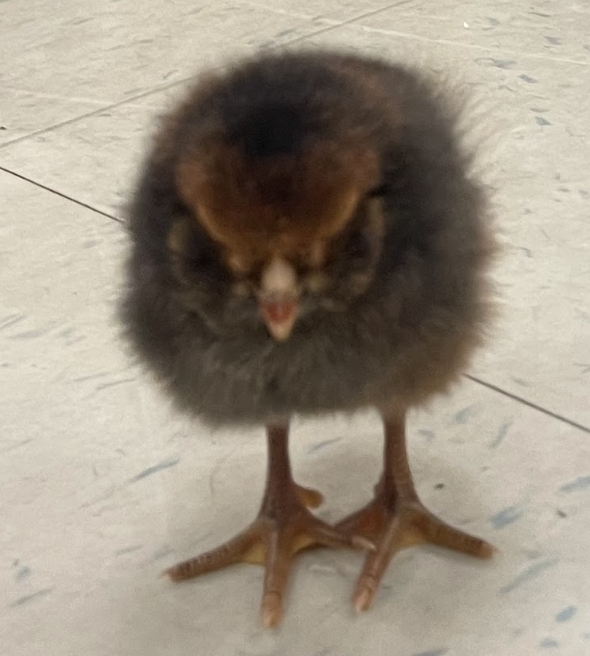
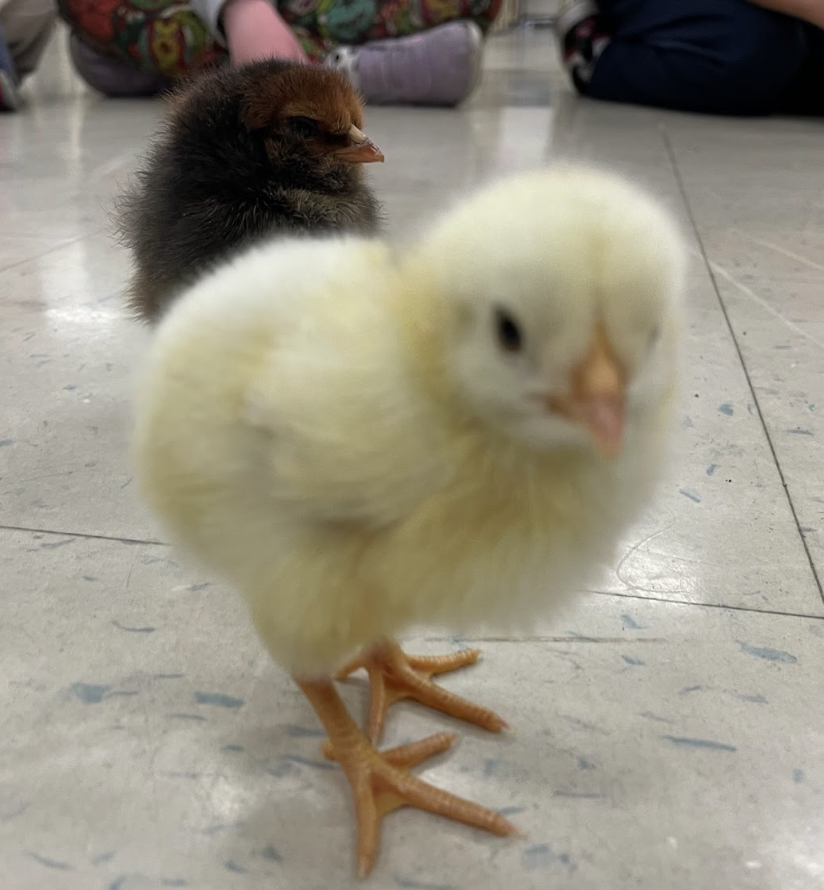
It was yet another busy week for us in our Grade 1 class.  As we got back into our regular routines after our exciting week of swimming last week, our school was buzzing with the baby chicks, which I’m sure you heard lots about!  We enjoyed checking in on the chicks in the Learning Commons and seeing more chicks arrive throughout the week.  

We were also lucky enough to have some of our Grade 6 buddies support us, with getting to have a closer look at them and for those of us who wanted to, a little pet as well.  We were surprised at how soft they were.  


Writing 

I can create written messages that are for an intended audience or for a specific purpose.

I can generate ideas that can be expressed through messages


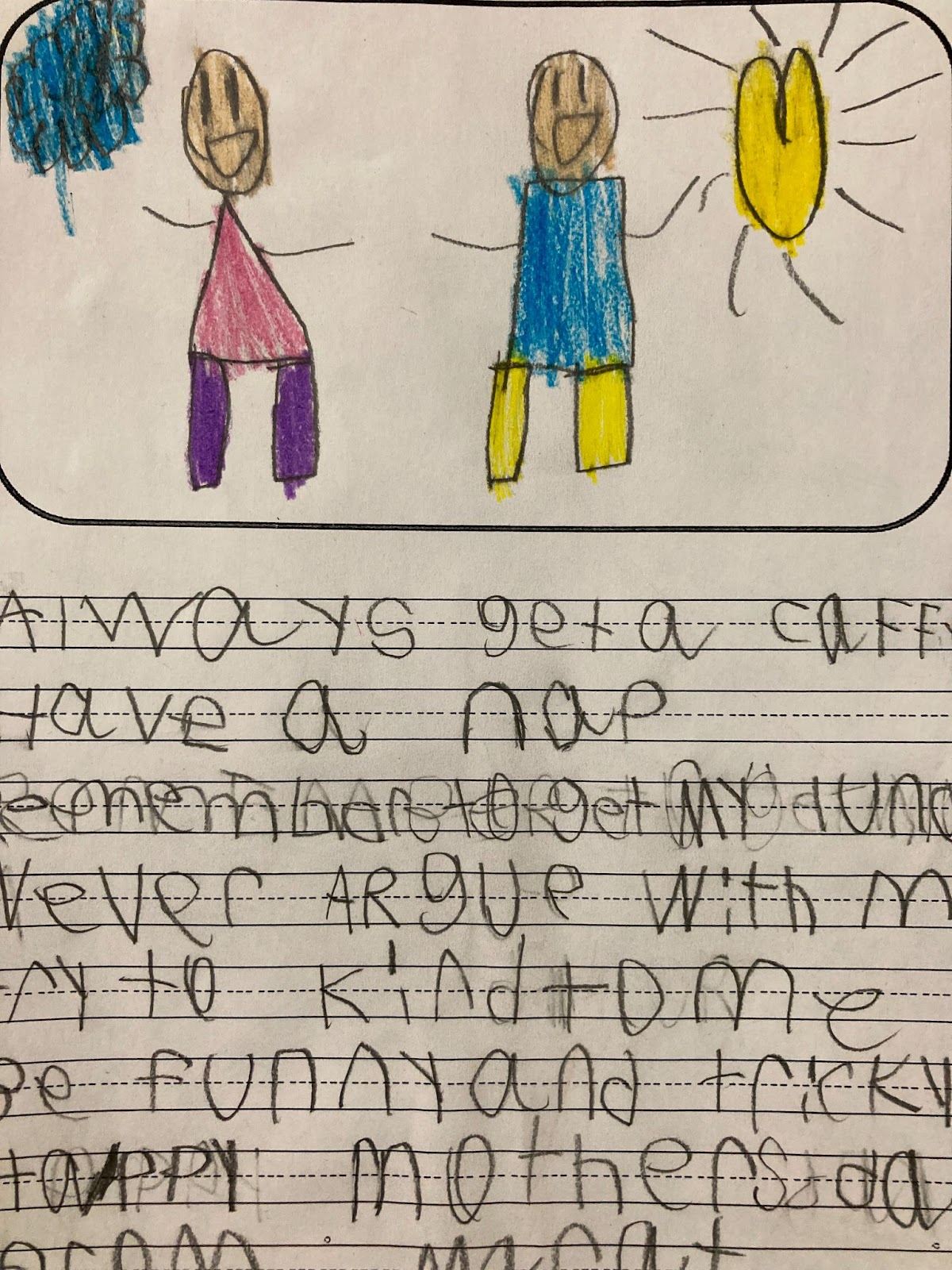
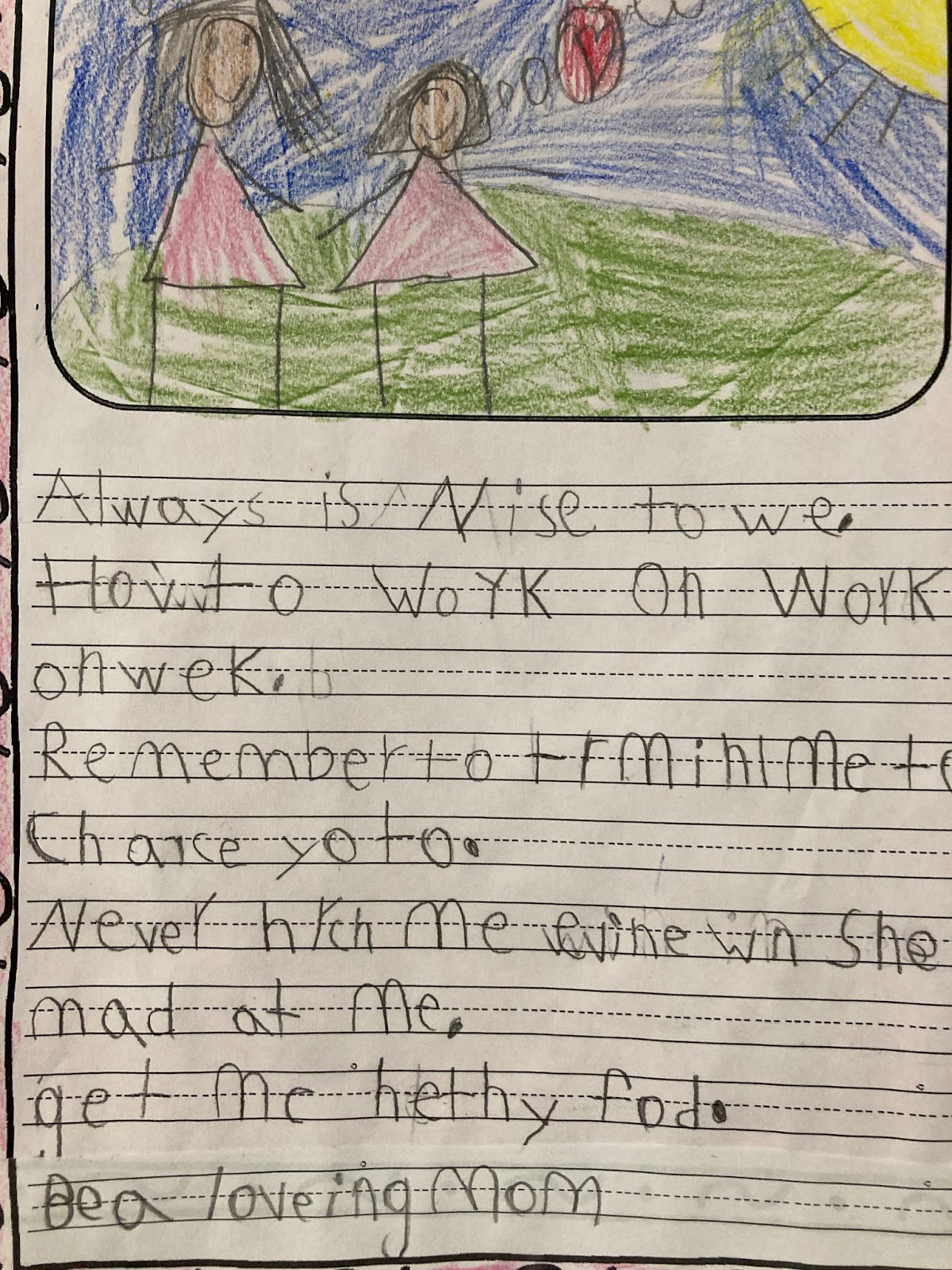
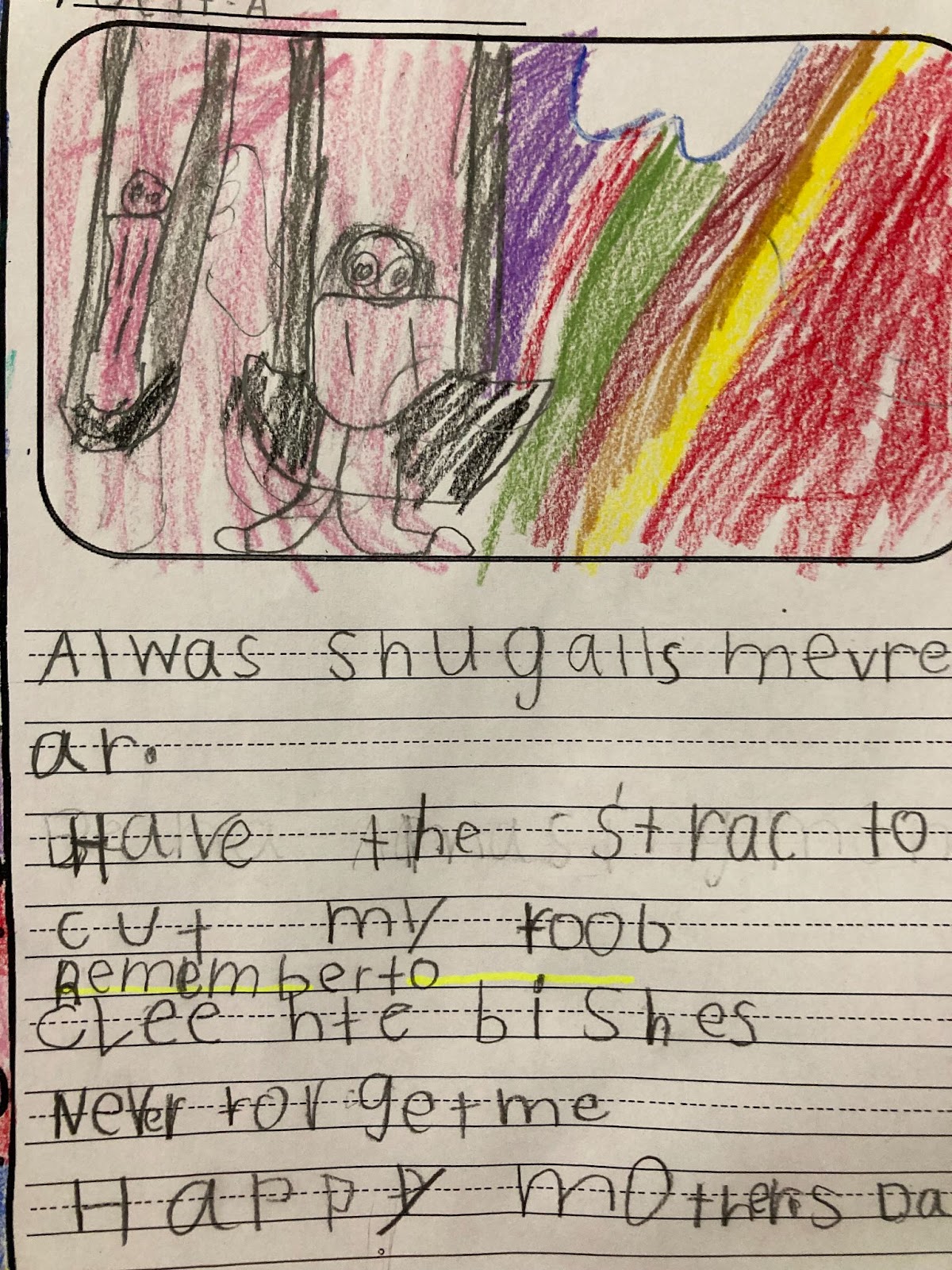
We returned to our how to writing to support us with creating a special message for our Moms.  We hope these will bring a smile to your faces!  The growth of our students as writers is amazing as they apply their letters and sounds and spelling patterns of vowels to their writing.  They also had some interesting ideas about “How to Be a Mom.”  We hope these remind you of how special you really are and how much you matter every day!  


Math

I can investigate different addition and subtraction strategies.

I can determine a missing quantity in a sum or difference, within 20, in a variety of ways.

I can model addition and subtraction within 20, in various ways, including with a balance


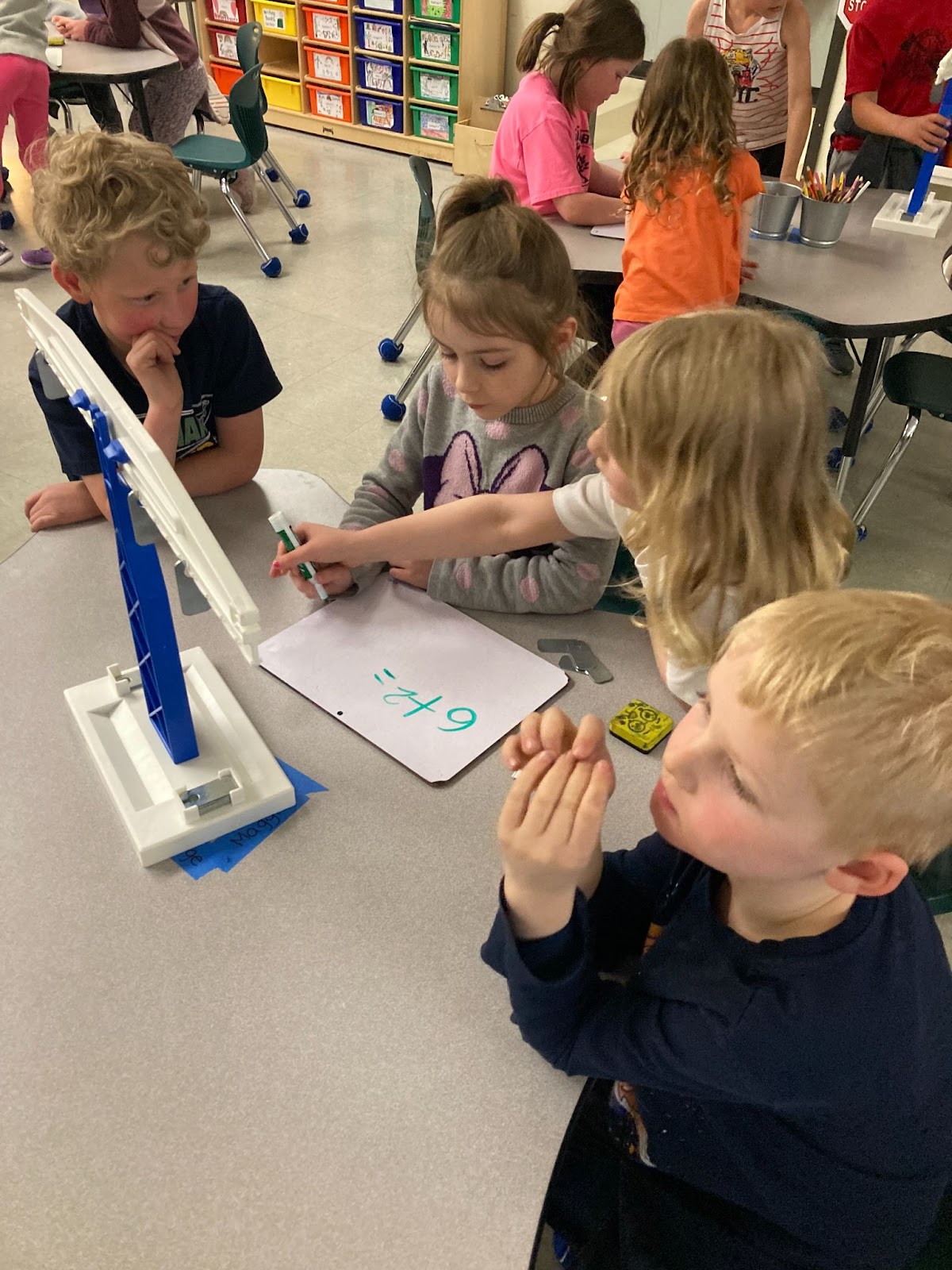
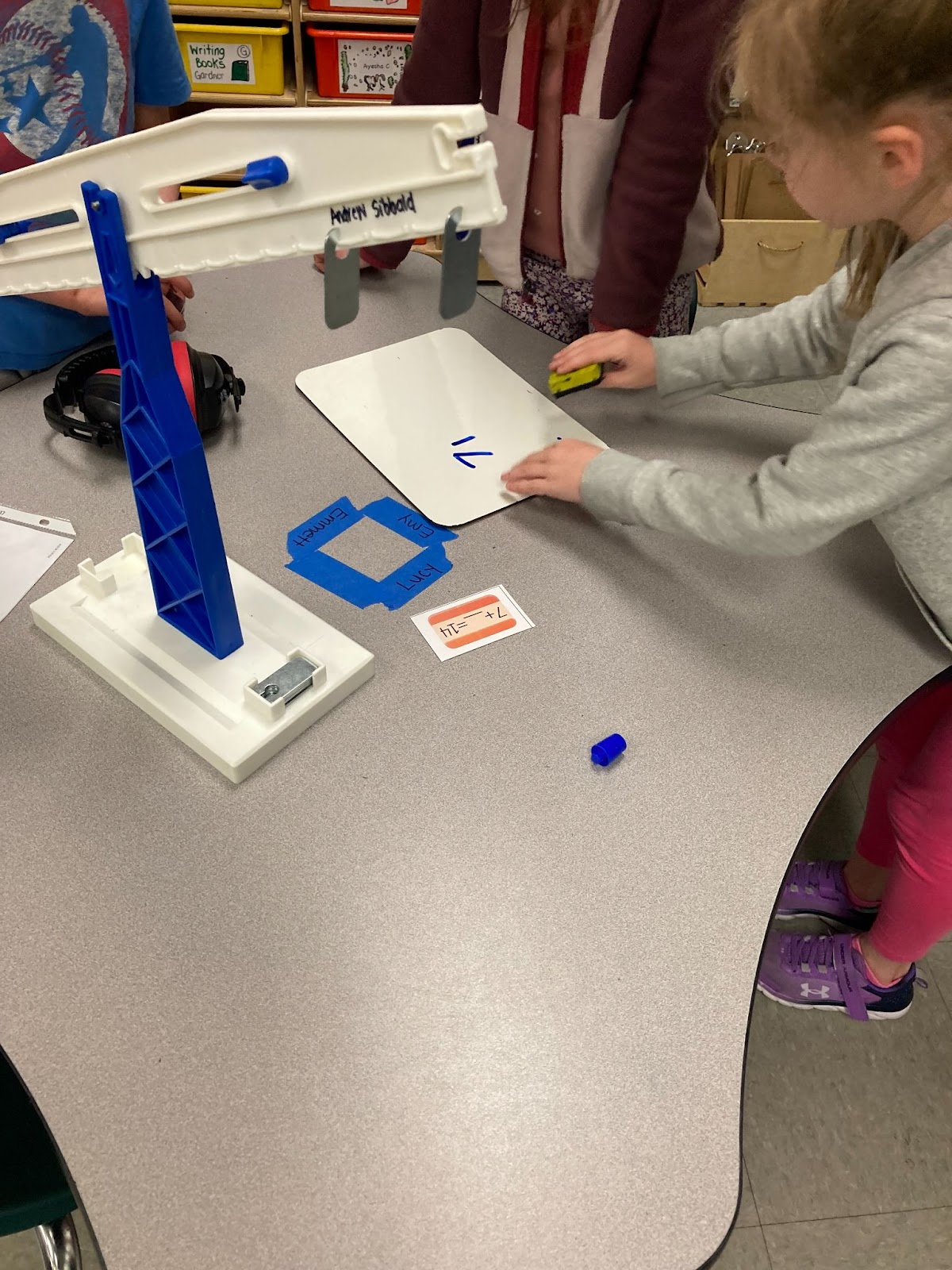
We continue to explore and build upon our increasing understanding of addition and subtraction.  Near the beginning of the week, Mrs. Gordon joined once again!  Using the balance scales, we had different math equations that had missing parts.  We had to work in our table groups to solve the problems so that the balances would balance and be equal.  We were very focused and it was excellent to see how we solved our problems together.  


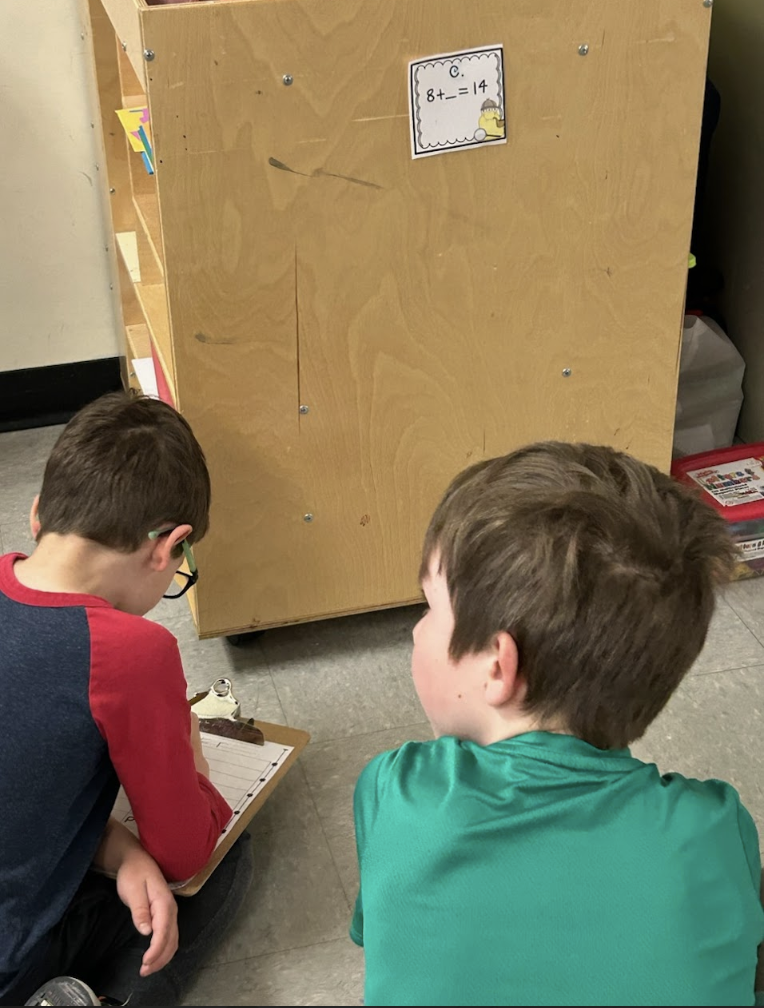
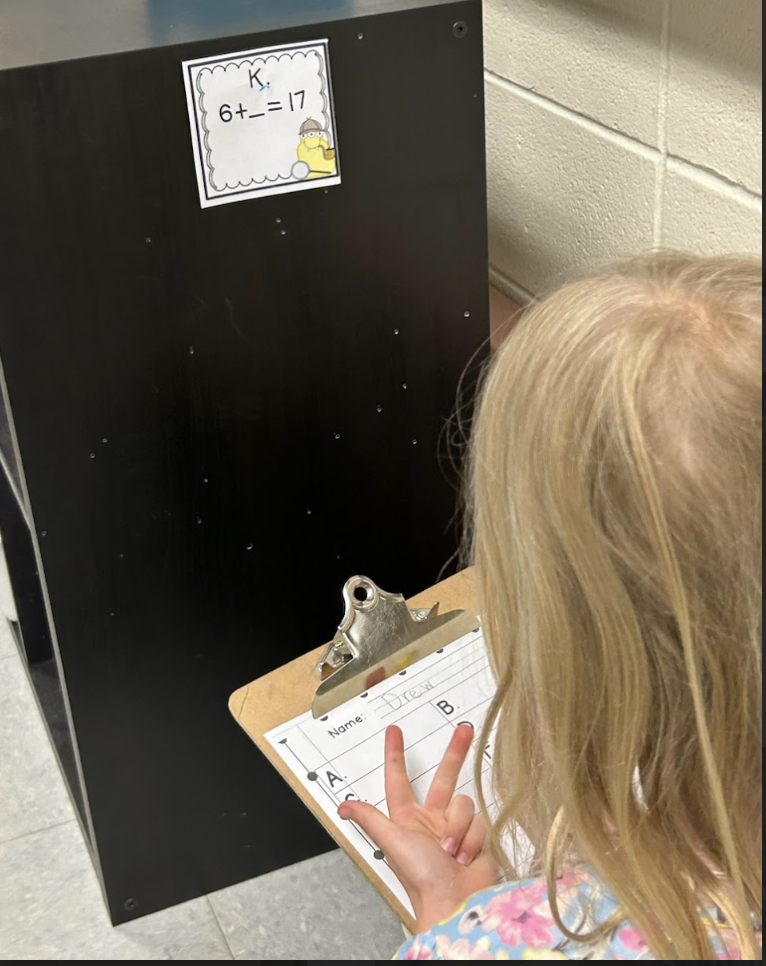
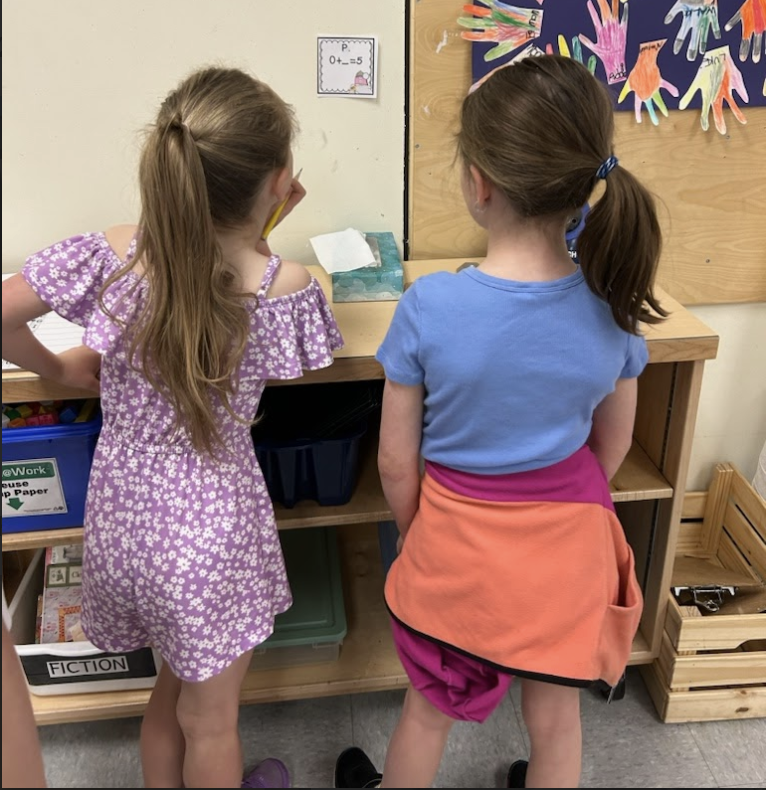
We continued to build on our skills of finding the missing part of a number sentence to build more practice for us.  The problems were all over the room and we had to move around and find the equations and then solve them.  We are really showing our fluency and confidence with addition and subtraction and will be wrapping up this focus in the coming weeks.  


Makerspace 

I can communicate effectively with others

I can collaborate with others.

I can show empathy to others.

I can show respect to others. 


Our challenge is makerspace this week was to work in our groups to construct a Chicken Coop that would give the chicks everything they would need to have a good place to live and be happy.  There were a lot of different things that we needed to include.  Here are some of the creations we built.  


Reading/Phonics

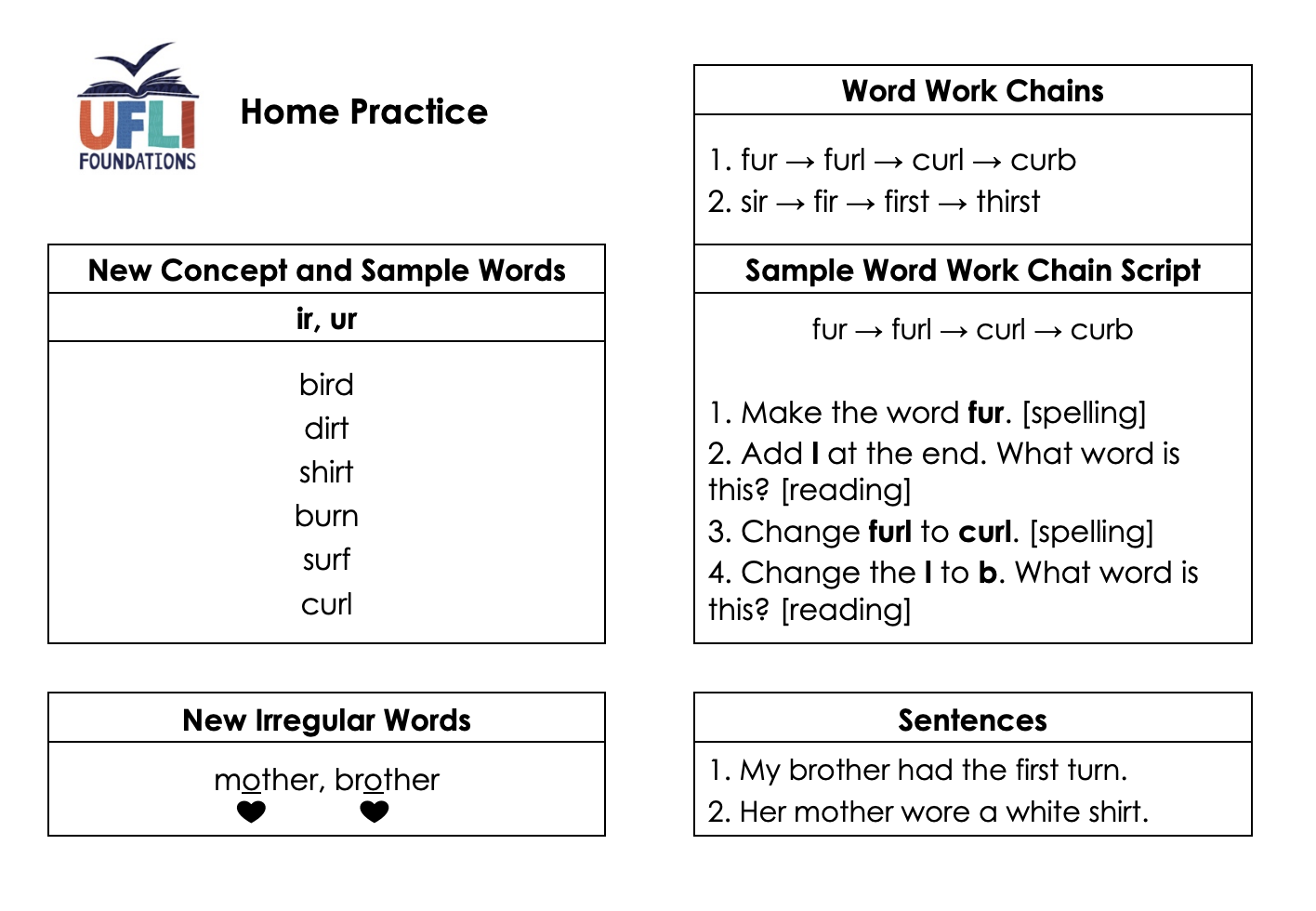
We continue to work on R-controlled vowels and this week focused on learning the IR and UR can also make the /er/ sound as well. 


Here is some further information in regards to our learning about subtraction and our counting on and counting back strategy.


Subtracting by Counting Back

•

When you know a total amount and you want to figure out how many are left when you take some away, you can count back from the total.

For example, if there are 14 birds and 6 fly away, you can count back to see how many birds are left:

13 (after the first bird flies away), 12, 11, 10, 9, and 8.

Note that when you count this way, you say one number for each bird that flies away. You can keep track with your fingers to make sure you say the correct number of numbers.

The number of birds remaining is the last number you say.

•

If you wish, you can count back by 2s and say 12, 10, and 8 as you think of 2 birds flying away at a time.

•

You can represent the situation on a bar model like this:

The bar model shows that there were 14 birds in total; one part (the birds that flew away) was 6, and the other part (the birds that stayed) was 8.

•

You can count back to subtract the part you know from the total.

For example, if there were 14 birds and now there are 8, you can count back 6 numbers from 14 to figure out how many birds flew away:

13, 12, 11, 10, 9, 8.

You said 6 numbers and ended on 8, so you know that 6 birds flew away.

•

You can count back until you get to the part you know to figure out the part you don’t know.

For example, if there were 14 birds and now there are 6, you can count back from 14 until you get to 6. The number of numbers you say is the number of birds that flew away:

13, 12, 11, 10, 9, 8, 7, 6.

You ended up at 6. You said 8 numbers, so you know that 8 birds flew away.


Subtracting by Counting On

•

Sometimes you know a total and a part, and you want to figure out the other part. This can be done by counting forward, or counting on, from the part you know.

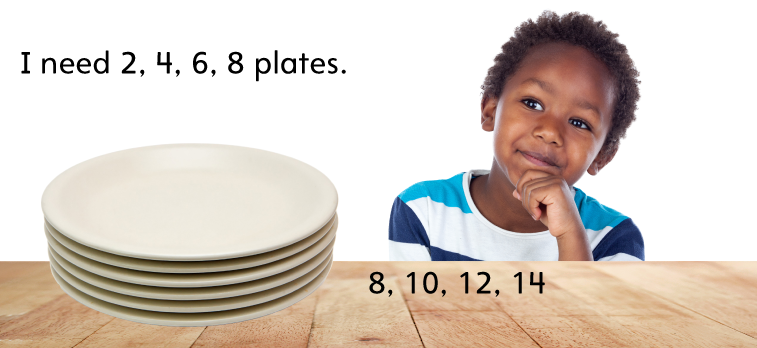
For example, suppose there are 14 people coming for dinner. If you know there are 6 plates on the table, you could count on from 6 to 14 to figure out how many more plates you need.

It’s not the last number that you say that tells you how many more you need; it is how many numbers you say.

You can keep track with your fingers. In this case, you said 8 numbers, so you need 8 more plates.

•

You can count on by 1s or 2s. If you count by 2s, you need 2 plates for every number you say.

•

You can represent the situation on a bar model like this:

•

Even though you are counting on, you are actually still subtracting the part you know from the total: 14 − 6.


Helping Your Child

It is useful for children to continue to practise counting on and also to practise counting back from numbers less than 20. Some practice in counting on by 2s (not starting at 1) is also useful, but do this only when the child is ready.

Your child can practise at any time. For example, you can say, “Count on from 6,” “Let’s count back from 15,” or “Can you count back from 10 by 2s?”


Friday, May 3, 2024

April 29-May 3

 Dear Parents,

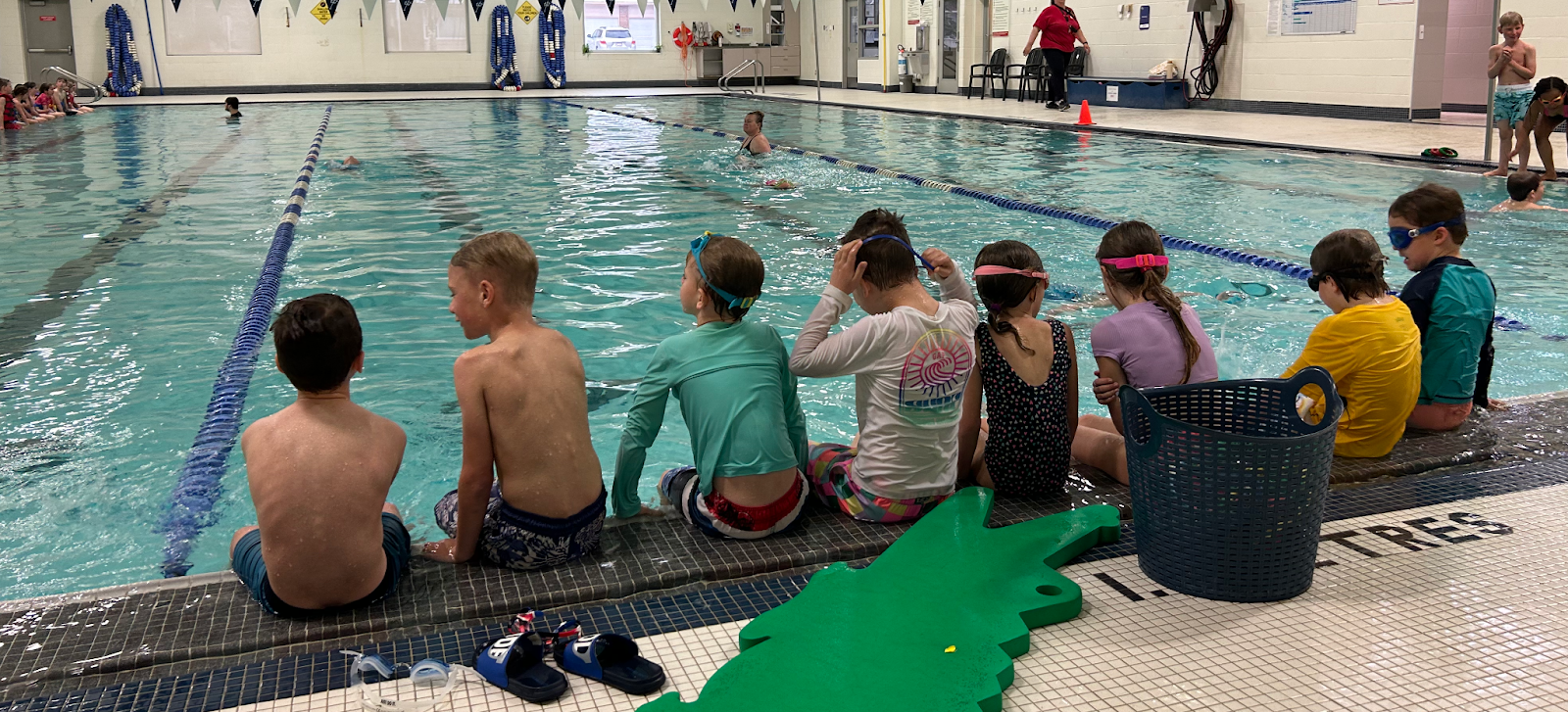
Thank you to all those parents who were able to volunteer their time and support our students on our swimming experience this week.  It was exciting to see the growth and development of our students in a short time.  It was great to see all children enjoying the water, being brave trying new things, and enjoying being with their peers.


Learning Intentions

  • Students investigate the benefits of physical activity.

  • Students exhibit spatial awareness during a variety of physical activities.

  • How can personal characteristics contribute to self-understanding


Take a look below and see what we have been up to when we were not at the pool!


Math

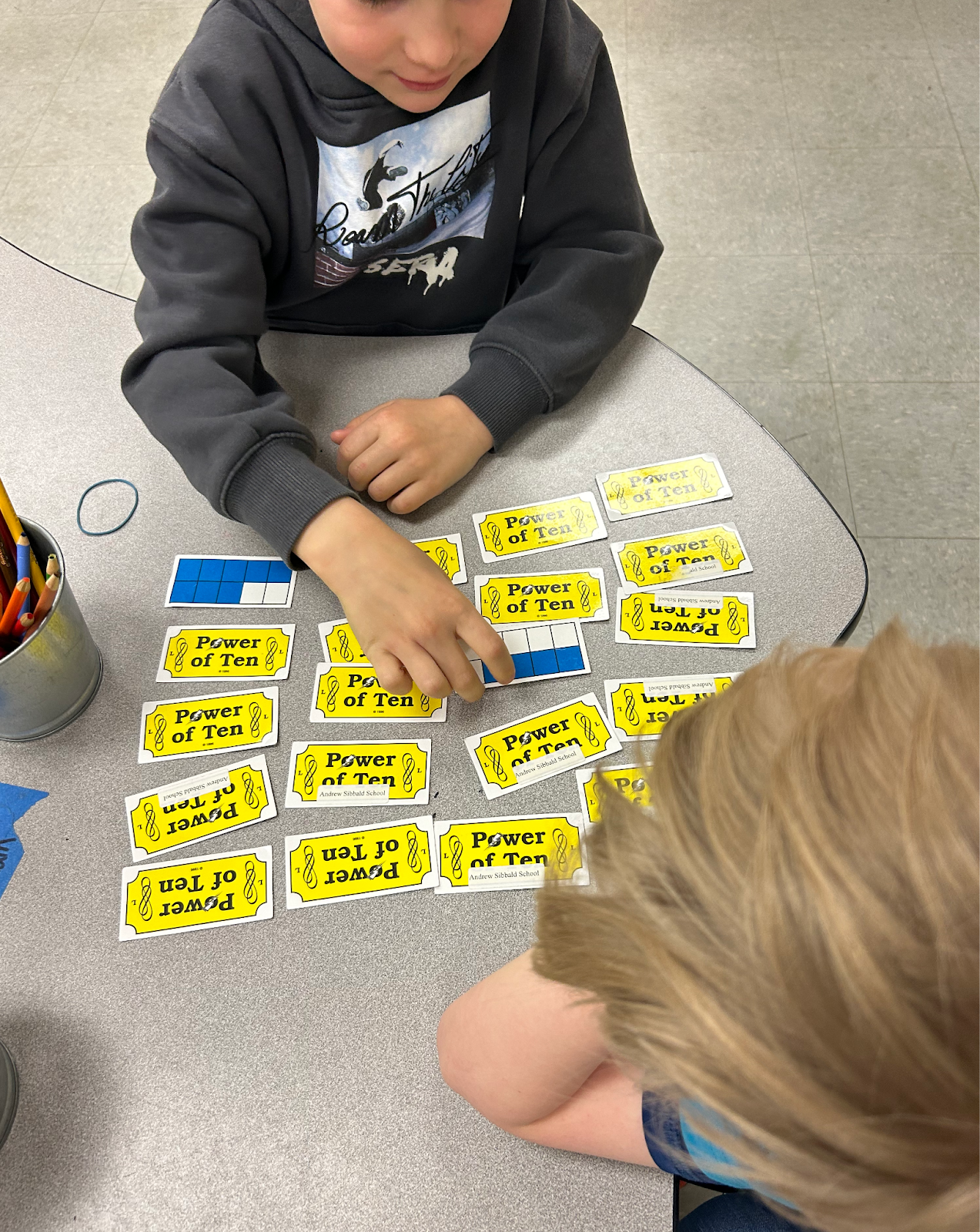
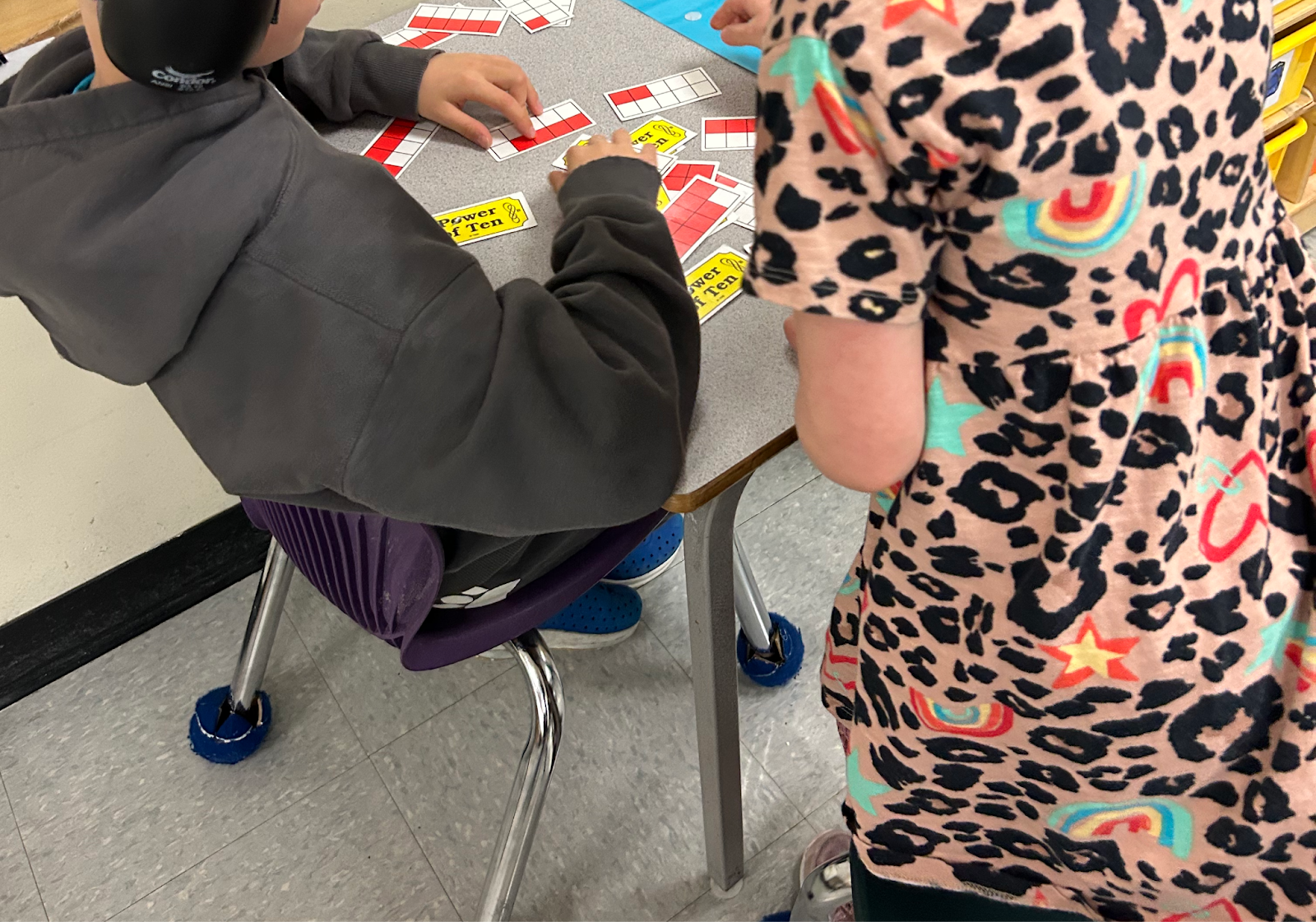
We have been practicing our addition and subtraction skills through playing games. 

Memory Match Making 10

Go Fish Making 10

These games can easily be played with a regular deck of cards.  Ask your child to teach you.  You can have a new game for family game night!


As well, we have been looking at measurement and becoming familiar with the term length and comparing lengths of different items.


Learning Intentions

Students examine addition and subtraction within 20.

Addition and subtraction strategies include

  • counting on

  • counting back

  • making tens


Social Studies

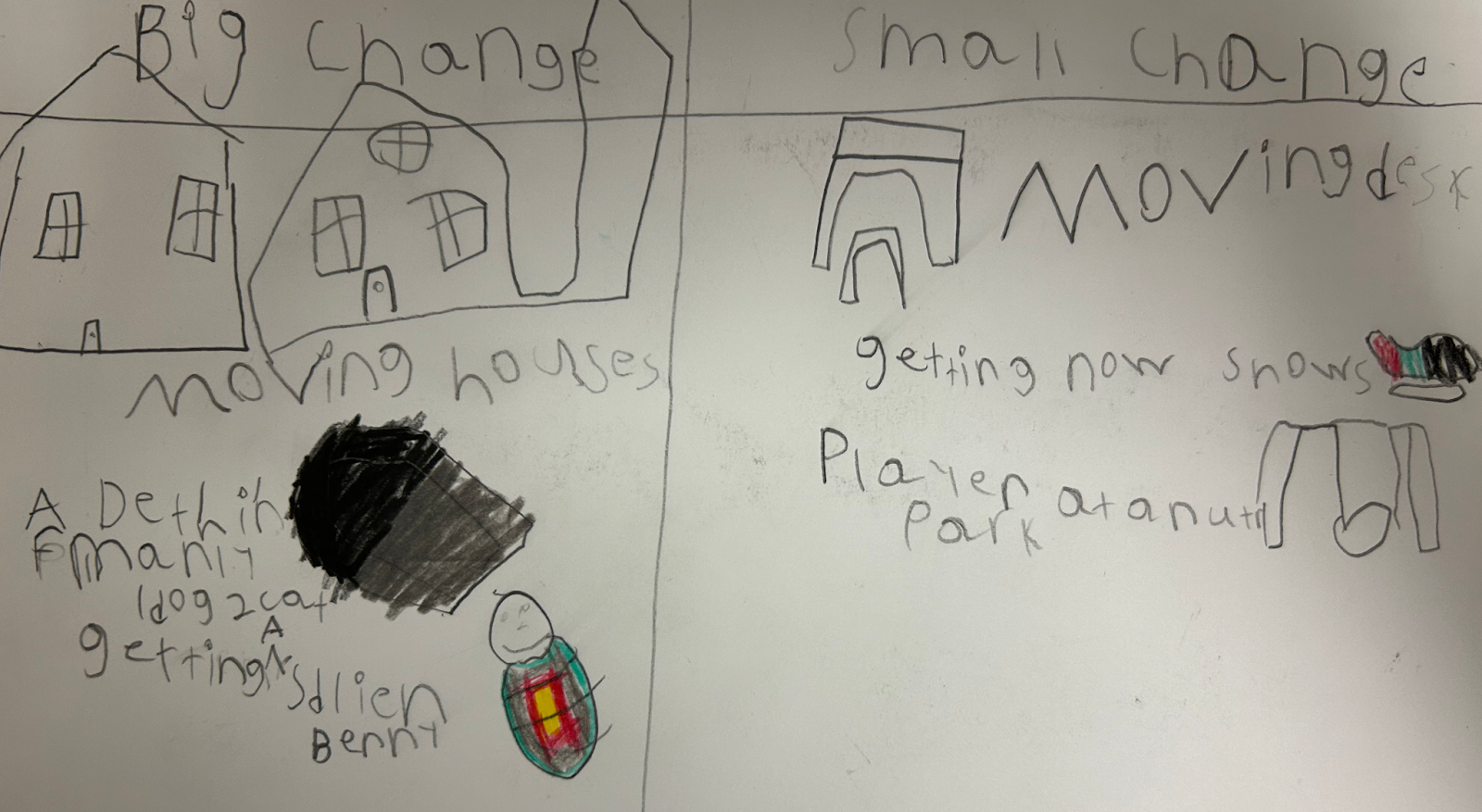
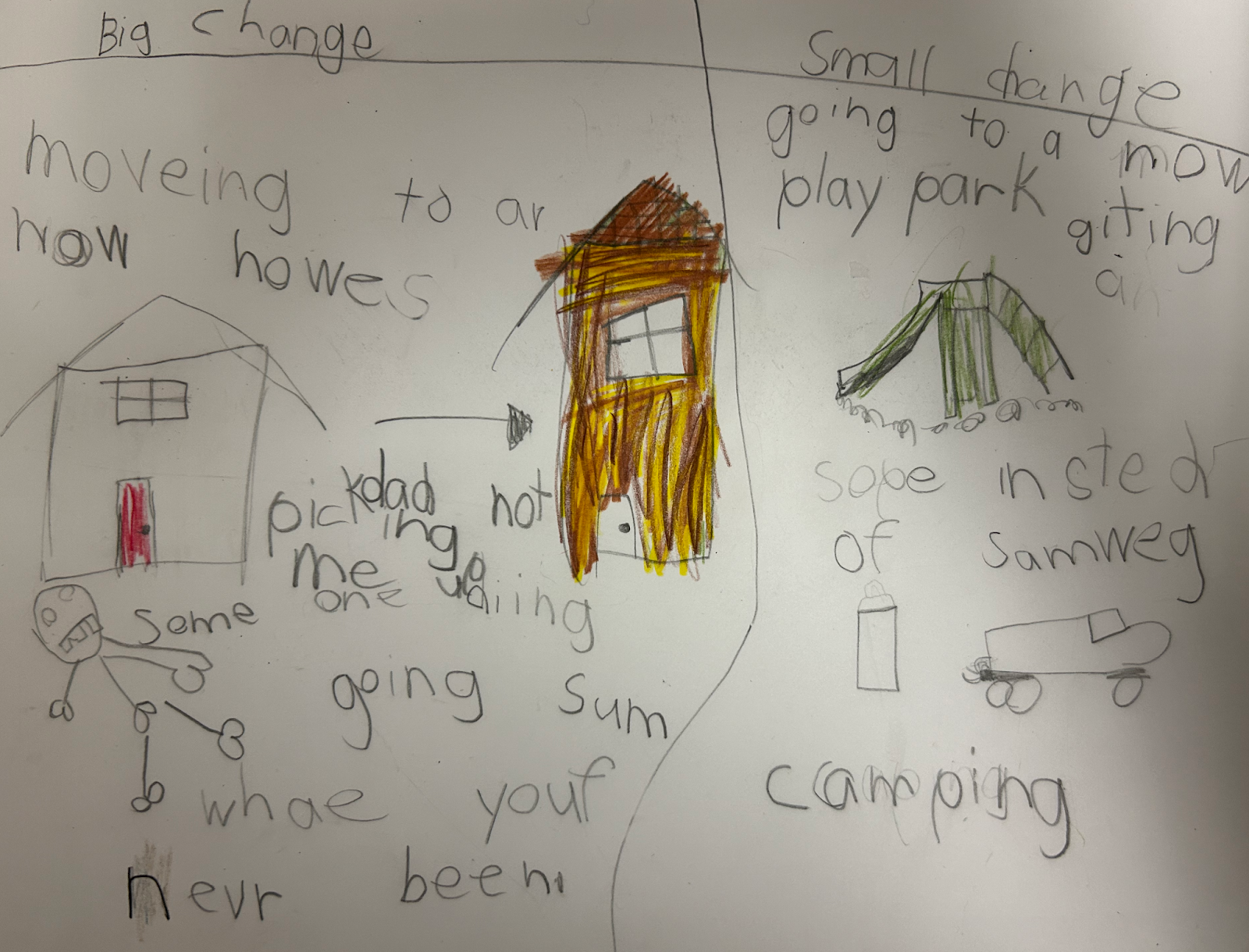
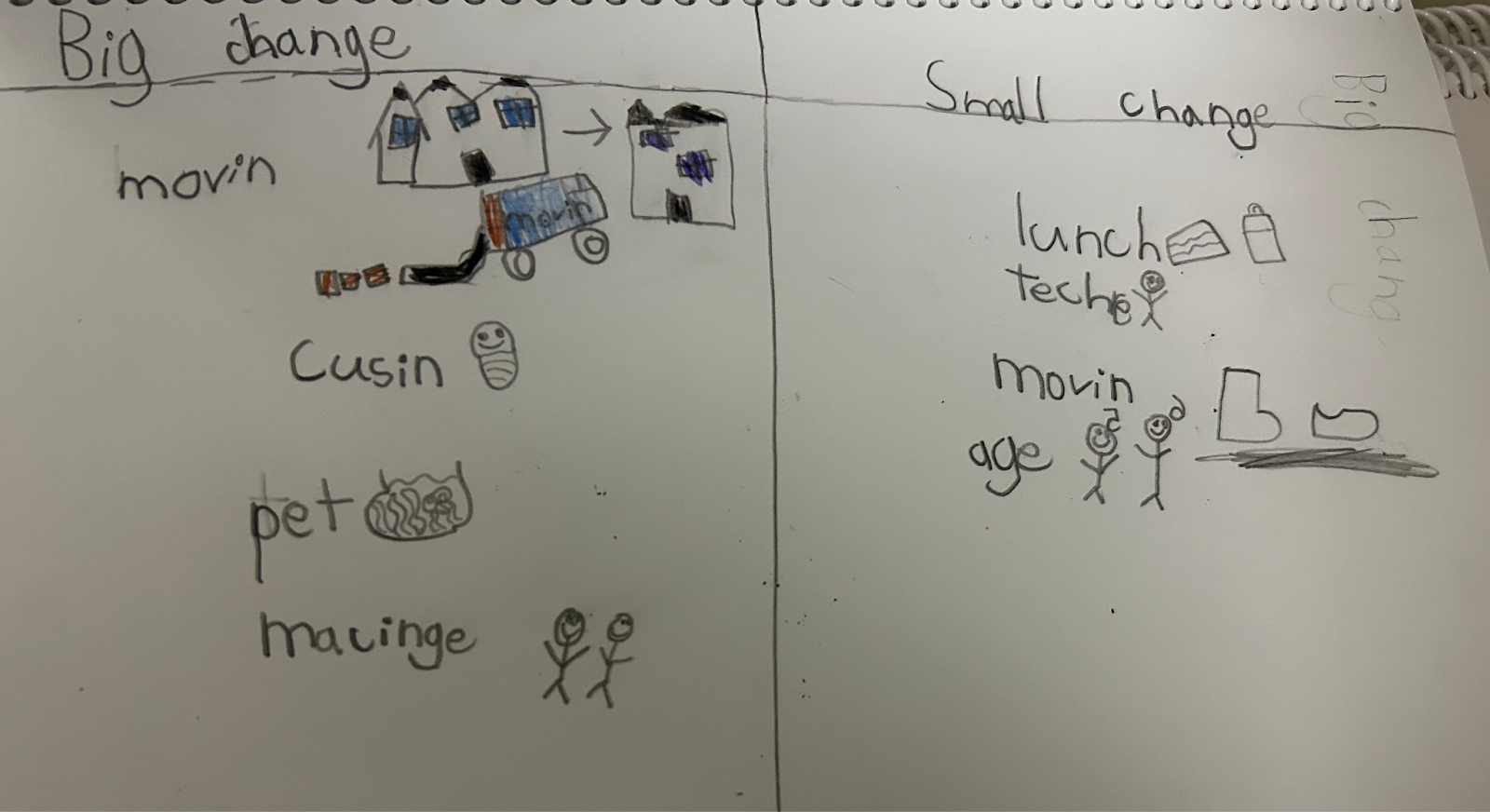
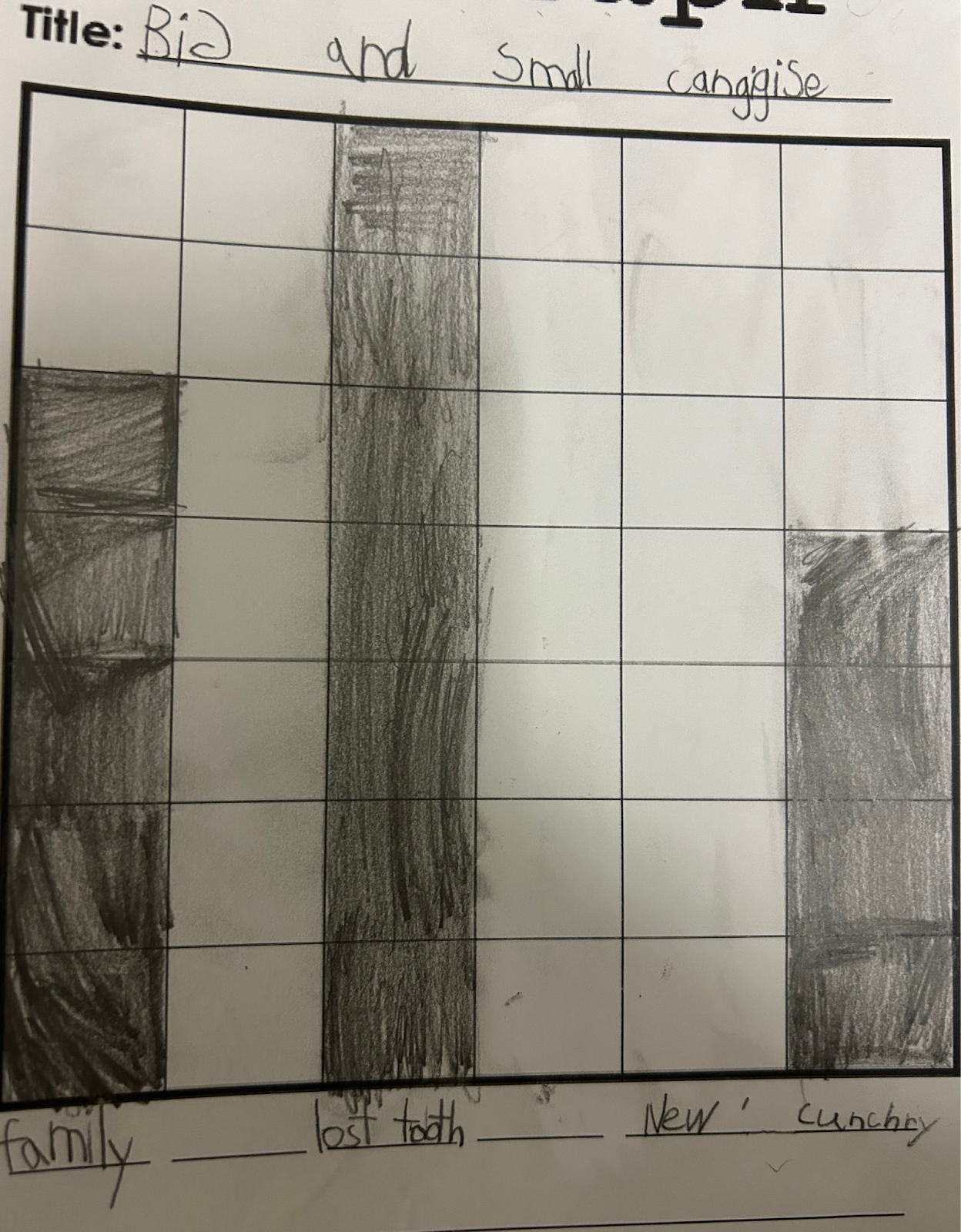
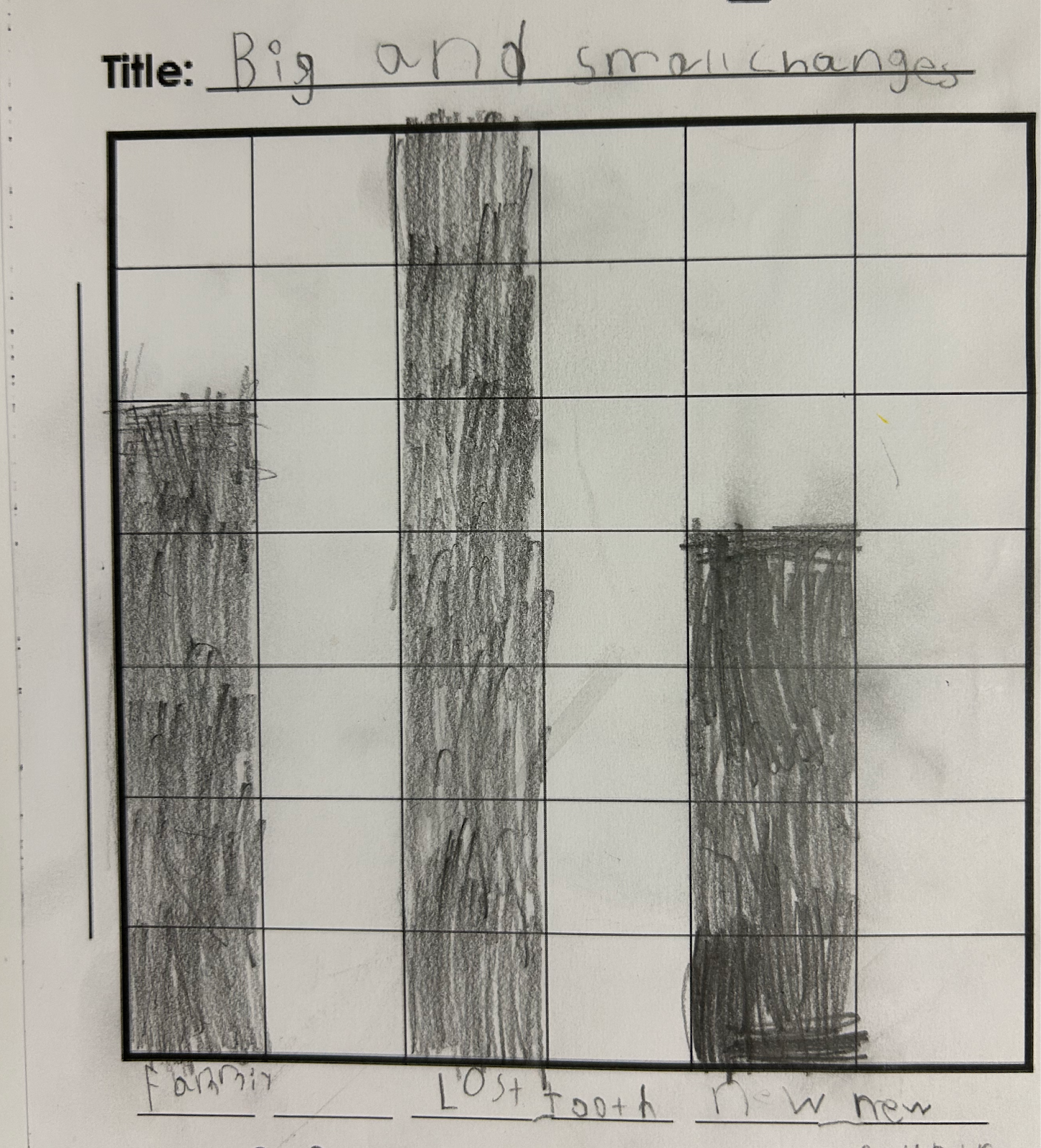
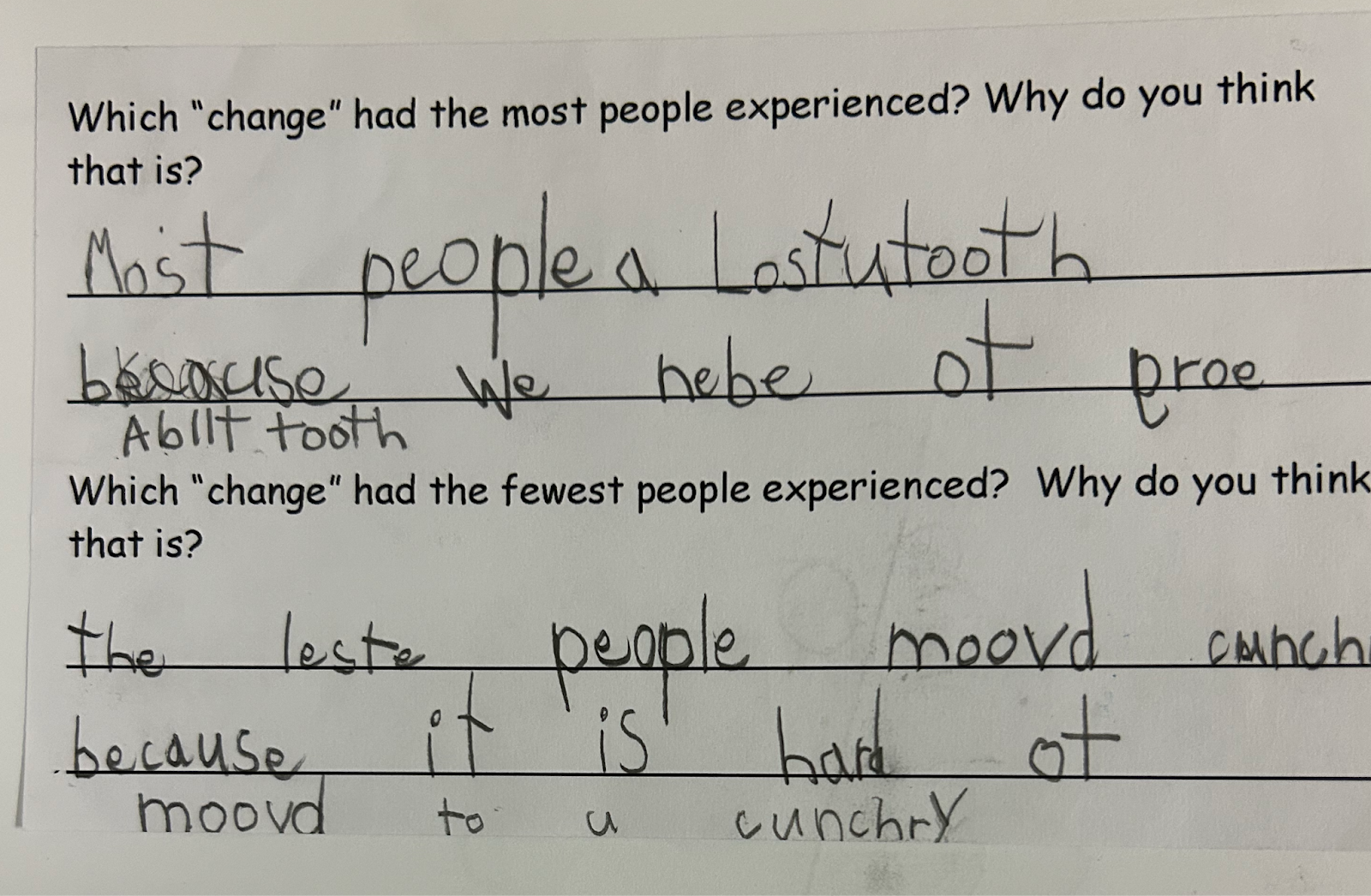
This week we focused on big and small changes that can happen within your family.  Students were introduced to several big and small that can happen from losing a tooth to big changes like moving to another country.  We collected data within our classroom and did a family survey.  Thank you to all families who discussed this survey with their child and returned the information.  This led to rich conversations within our classroom. 


Learning Intentions

  • How have changes affected my family over time?

  • What is my family's past in my community?


Literacy

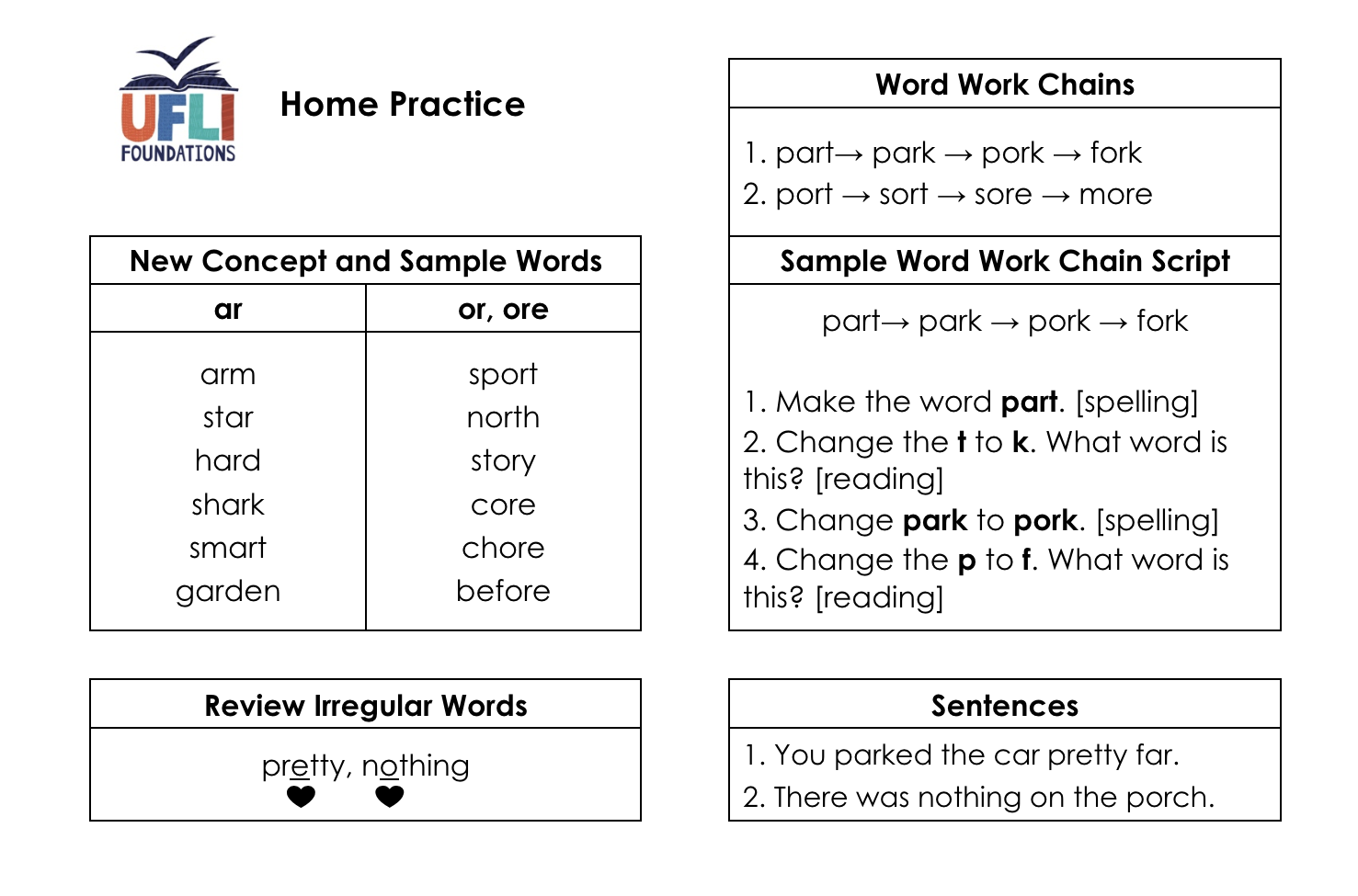
We continued to develop our understanding of “r-controlled” vowels.  Please take time to review the home practice with your child. 


June 17-21

June 17-21 A few reminders: All Home Literacy/Decodable Books - Please have your child return these.  We will not be sending any more home f...